
Spring and summer in the Triangle bring beautiful weather, but they also bring severe atmospheric instability. It is a common occurrence for a humid afternoon in Wake County to abruptly shift into a severe weather alert. Within minutes, localized microclimates can unleash 60-mph straight-line winds, torrential downpours, and golf-ball-sized hail.
When a severe storm system rolls through the City of Oaks, your roof bears the full brunt of the impact. While a fallen tree limb through your ceiling is an obvious crisis, the most dangerous type of storm damage is completely invisible from the ground. Thousands of Raleigh homeowners are currently living under structurally compromised roofs without even knowing it.
If your neighborhood has recently experienced severe weather, waiting for a ceiling leak to appear before taking action is a critical mistake. Securing a professional, independent storm damage roof inspection in Raleigh, NC, is the only definitive way to preserve your home’s structural integrity and ensure your insurance rights are protected.
The Invisible Threat: Decoding Hail and Wind Damage
To the untrained eye, a roof may look perfectly fine from the driveway after a hailstorm. However, the true damage occurs at a microscopic level that requires a trained eye and physical inspection on the roof field.
Hail Impact and Granule Loss
When hail strikes an asphalt shingle, it creates a physical “bruise” by fracturing the underlying fiberglass mat. This impact instantly knocks loose the protective ceramic granules embedded in the shingle surface. Without these granules, the raw asphalt layer is directly exposed to North Carolina’s harsh UV rays. Over the next 6 to 12 months, the sun will literally bake and crack the exposed asphalt, causing it to become brittle and fail during the next heavy rainfall.
Wind Uplift and Creased Shingles
High winds don’t always tear shingles completely off the roof. More frequently, strong wind gusts create a vacuum effect, lifting the shingles up and breaking the manufacturer’s internal thermal sealant strip. Once this seal is broken, the shingle flaps up and down in subsequent storms, creasing the fiberglass backing. A creased shingle can no longer shed water properly and acts as a funnel, directing rainwater straight down toward your wooden roof decking.
The Danger of Out-of-State “Storm Chasers”
These salespeople will offer a “free inspection” and use high-pressure tactics to get you to sign a contingency agreement. This document frequently legally binds you to use their company if your insurance claim is approved. Because these crews rely on transient, uncertified day labor, the quality of their work is notoriously poor.
Once they collect your insurance check, they pack up and move to the next storm zone in a different state. When their substandard work inevitably fails and begins to leak a year later, your workmanship warranty is completely worthless, leaving you to pay a local contractor entirely out of pocket to fix their mistakes.
STORM CHASER RED FLAGS
1. Out-of-state phone numbers or temporary local P.O. boxes
2. High-pressure “sign today” contingency agreements
3. Offering to “waive” your legal insurance deductible
4. Lack of permanent, physical brick-and-mortar local offices
The G3 Roofing Inspection Protocol
When you partner with G3 Roofing for a storm damage evaluation, you are engaging a permanent, deeply rooted local business. Our inspections are transparent, forensic, and entirely data-driven.
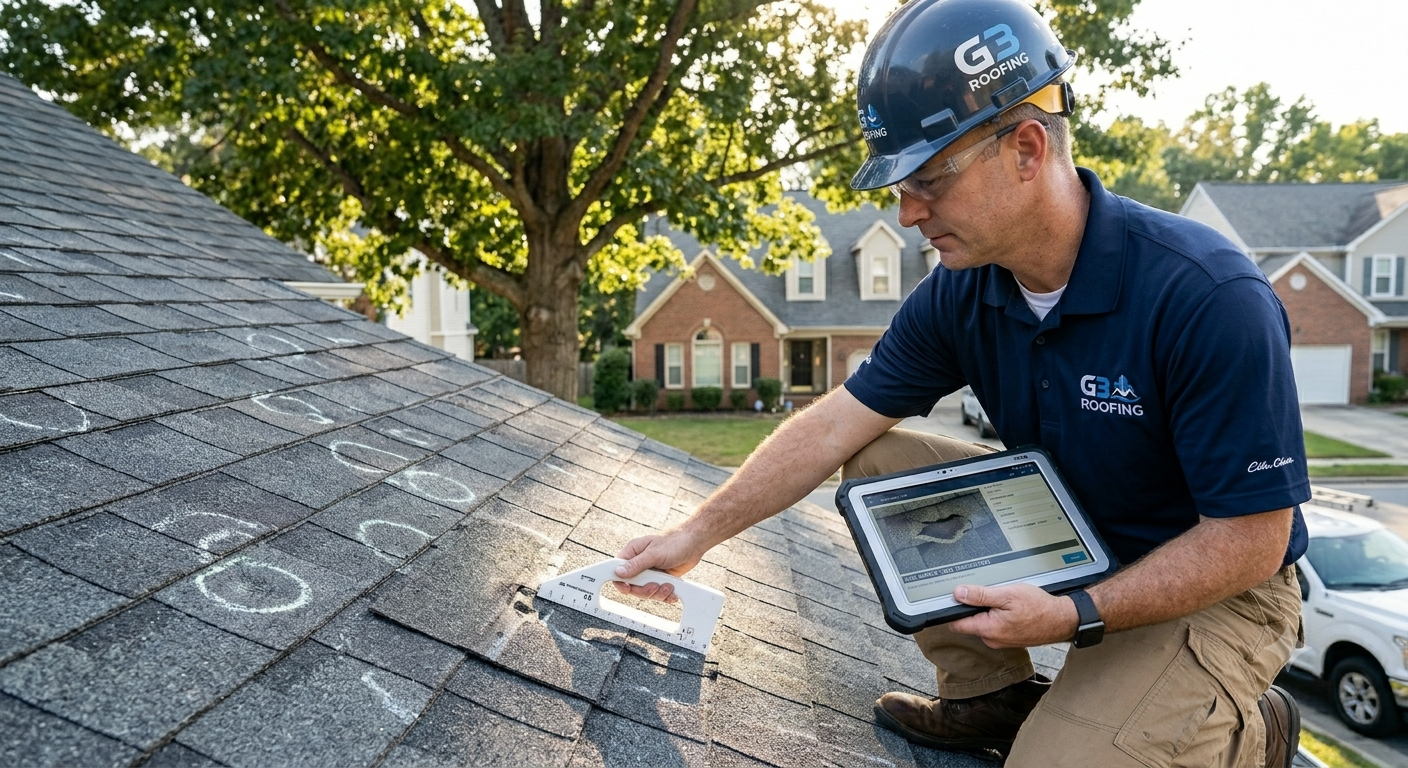
We do not use high-pressure sales pitches. Instead, our certified roof inspectors physically ascend your roof to document the property using a rigorous, multi-point protocol:
- Test Squares: We mark off a standard 10-by-10-foot “test square” on every slope of your roof to systematically count the exact number of verifiable hail impacts, ensuring the data meets strict insurance adjusting criteria.
- Collateral Damage Assessment: We check all soft metals on your property—such as downspouts, window flashing, aluminum gutters, and ridge vents—for physical indentations, which provide undeniable evidence of hail size and velocity for your insurance carrier.
- Comprehensive Digital Reports: We provide you with a comprehensive photographic portfolio detailing every single point of compromise, giving you the hard evidence needed to file a clear, successful claim.
Navigating Your Insurance Claims Window
It is vital to understand that homeowner insurance policies do not provide an infinite window to file a storm damage claim. Most standard policies in North Carolina feature a strict “statute of limitations” clause, typically requiring you to file a claim within one year of the verifiable weather event.
If you wait too long and attempt to file a claim after the deadline has passed, your insurance company will legally deny the claim, citing owner neglect or pre-existing wear and tear.
Protect Your Investment with a Trusted Local Partner
Do not let a sudden Wake County storm permanently devalue your home or leave you vulnerable to predatory out-of-state scammers. G3 Roofing lives and works right here in the Triangle. We understand the specific nuances of North Carolina weather, local building codes, and regional insurance standards.
If your neighborhood has recently experienced high winds or hail, achieve absolute peace of mind. Contact the trusted, permanent local experts at G3 Roofing today at (919) 213-6005 to schedule your thorough, transparent storm damage roof inspection.