Every commercial building owner in the Triangle area knows that a roof is a massive capital expenditure. Naturally, the goal is to squeeze every possible year out of your existing commercial roofing system through diligent maintenance and timely repairs. However, there comes a tipping point where continuing to patch a failing roof becomes vastly more expensive than investing in a full replacement.
In Wake County, commercial flat roofs take a unique beating. The relentless UV radiation of a Carolina summer degrades roofing adhesives, while heavy storm seasons test the limits of your drainage systems. Knowing exactly when to pull the trigger on a flat roof replacement is critical to protecting your tenants, your inventory, and your bottom line.
The Tipping Point: Repair vs. Replacement
Not every leak requires a completely new roof. A localized puncture from falling tree debris or a single failed flashing joint can usually be repaired effectively by a skilled local professional. But how do you know when your roof is beyond saving?
Look for these critical indicators of systemic flat roof failure:
- Chronic, recurring leaks that appear in different areas of your facility.
- Core samples revealing that over 25% to 30% of your underlying roof insulation is completely saturated with water.
- Your current flat roof membrane is well past its expected lifespan (typically 15 to 25 years, depending on the material).
- Noticeable sagging between the roof joists, indicating severe structural rot in the decking.
The Danger of Trapped Moisture
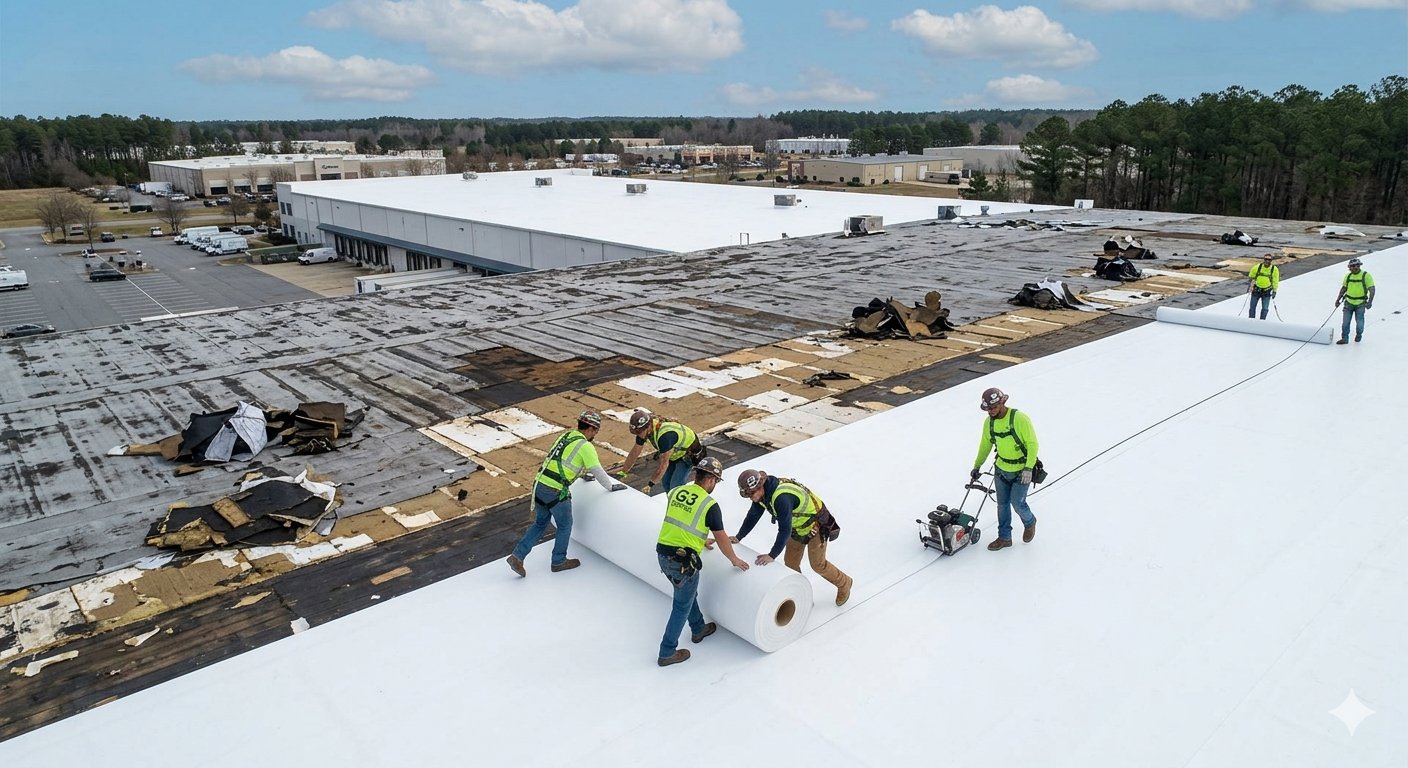
One of the biggest mistakes a business owner can make is allowing an out-of-town contractor to perform a “layover”—installing a brand-new roof membrane directly over top of a failing, water-logged system.
In North Carolina’s humid environment, trapping wet insulation inside your roof cavity is a recipe for disaster. The trapped moisture will rapidly rot your building’s structural decking from the inside out and create a massive breeding ground for toxic black mold. This not only destroys your new roof but creates severe liability and health risks for the occupants of your building. A reputable, local Wake County contractor will always perform infrared moisture scans or core tests to determine if a full tear-off is necessary.
Why Local Expertise is Non-Negotiable
A commercial flat roof replacement is a complex engineering project. It requires calculating proper slope for drainage, selecting the right reflective materials (like TPO or PVC) to combat Raleigh’s heat island effect, and navigating strict municipal permitting.
Out-of-state storm chasers simply do not have the logistical footprint or the local accountability to handle commercial replacements correctly. They often rely on high-pressure sales tactics after a storm, promising to “eat your deductible.” Once the insurance check clears, they move on to the next state, leaving you with no warranty support when their subpar installation fails.
G3 Roofing: Wake County’s Commercial Flat Roof Experts
At G3 Roofing, we build commercial roofs designed to withstand the harshest North Carolina elements. We understand that a roof replacement disrupts your business, which is why our localized teams work efficiently, safely, and cleanly to get your facility protected with minimal downtime.
If you are tired of paying for constant repairs on a failing flat roof, contact G3 Roofing today. We will provide an honest, transparent, and structurally sound plan for your commercial flat roof replacement in Wake County.