Living in Wake County means enjoying beautiful seasons, but it also means dealing with a highly unpredictable climate. A calm, overwhelmingly humid summer afternoon in the City of Oaks can transform into a violent, localized thunderstorm in a matter of minutes. Between the sheer force of 60-mile-per-hour wind gusts, unexpected springtime hail, and the annual threat of fall hurricane remnants pushing through the Triangle, your roof is constantly on the front lines defending your home.
When a severe weather event strikes and your roof’s structural integrity is instantly compromised, panic naturally sets in. Whether a massive oak tree branch has violently crashed through your decking, or high winds have violently ripped away an entire section of your asphalt shingles, water intrusion into your living space can happen rapidly. In these terrifying moments, homeowners frantically search for an “emergency roof repair Raleigh NC.”
However, what you do in the immediate aftermath of a roofing crisis will dictate whether your home suffers minor, fixable damage or devastating, tens-of-thousands-of-dollars in structural ruin. To protect your biggest financial investment and keep your family safe, you must know exactly how to handle a sudden roofing emergency before the next big Carolina storm hits.
1. Prioritize Internal Safety and Damage Control
When water is actively pouring into your living room, the immediate instinct is to grab a ladder, climb onto the roof, and try to stop the leak. You must resist this urge. Walking on a wet, structurally compromised roof during or immediately after a severe storm is incredibly dangerous and can easily result in fatal injuries. Leave the climbing to fully insured, local professionals.
Instead, focus entirely on internal triage.
- Clear the area: Immediately move expensive furniture, electronics, and area rugs away from the active leak.
- Catch the water: Place large buckets, heavy-duty trash cans, or deep pots directly under the leak. Place an old towel at the bottom of the bucket to muffle the dripping sound and prevent water from splashing out onto your floors.
- Relieve ceiling pressure: If you notice your drywall ceiling bulging and holding a massive bubble of water, carefully use a screwdriver to poke a small hole in the center of the bulge. This allows the water to drain cleanly into your bucket, preventing the entire saturated drywall ceiling from violently collapsing into your living room.
2. Beware the Predatory “Storm Chasers”
Any time a major severe weather event impacts the East Coast, massive fleets of unmarked trucks with out-of-state license plates roll into the Triangle. Almost overnight, Wake County neighborhoods are flooded with transient “storm chasers.” These door-to-door salespeople use aggressive, high-pressure tactics to capitalize on your panic.
They will hand you a generic flyer, point to a minor missing shingle, and promise to give you a “free roof” by legally manipulating your insurance company. If you sign their paperwork, you are often signing away your rights. Because these out-of-town crews do not rely on local word-of-mouth to survive, the quality of their emergency tarping and final repairs is almost always completely substandard. Once they collect your massive insurance check, they disappear back across state lines. When their faulty work begins to leak six months later, their phone lines will be disconnected, leaving you to pay a local contractor entirely out of pocket to fix their mistakes.
3. Secure Professional Emergency Tarping
The moment your interior is secure, your next call should be to a trusted, localized roofing contractor. The immediate goal is not to perform a permanent, beautiful repair in the middle of a storm; the goal is absolute weatherproofing to stop the bleeding.
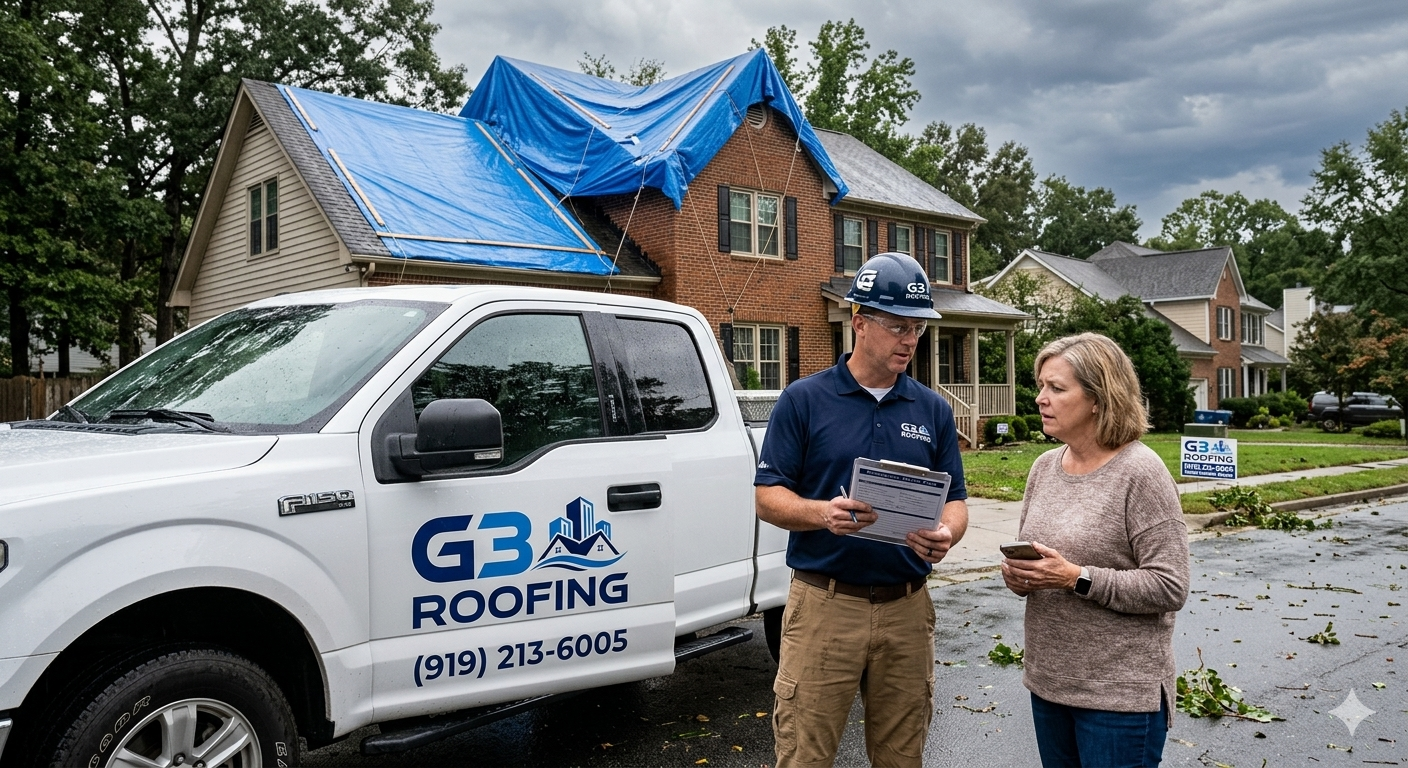
A legitimate local contractor will safely deploy to your property to provide professional emergency tarping. Heavy-duty, UV-resistant tarps will be securely nailed or weighted over the damaged area, overlapping the roof’s peak to ensure heavy rain cannot blow underneath. This critical step completely stops the water intrusion, secures your property against subsequent rain bands, and buys you the time needed to thoroughly assess the damage and engage your insurance company without the pressure of an active, running leak.
4. Navigating Your Insurance Claim Locally
Filing a homeowner’s insurance claim for emergency storm damage can be an overwhelming, highly bureaucratic nightmare. Insurance adjusters are trained to minimize the payout for the insurance company, often citing “pre-existing wear and tear” to deny your claim for obvious wind uplift or hail bruising.
This is exactly why you need an established, local roofing professional in your corner. A local Wake County roofer understands exact municipal building codes. We will meet your insurance adjuster directly on your roof, provide meticulously documented photographic evidence of the storm damage, and advocate fiercely on your behalf. We ensure that the insurance estimate actually covers the true, localized cost of labor and materials needed to restore your home to pre-storm condition.
Trust G3 Roofing for Your Emergency Needs
When disaster strikes your home, you do not have time to gamble on an unknown, transient roofing crew. G3 Roofing is deeply rooted in the Raleigh community. We live here, we work here, and we understand exactly how North Carolina weather attacks a residential home.
We provide rapid, highly professional emergency response to secure your property, followed by honest, transparent repair estimates that you can rely on. Don’t let a sudden Wake County storm permanently compromise your safety. Contact the local experts at G3 Roofing immediately for reliable, permanent emergency roof repair.